
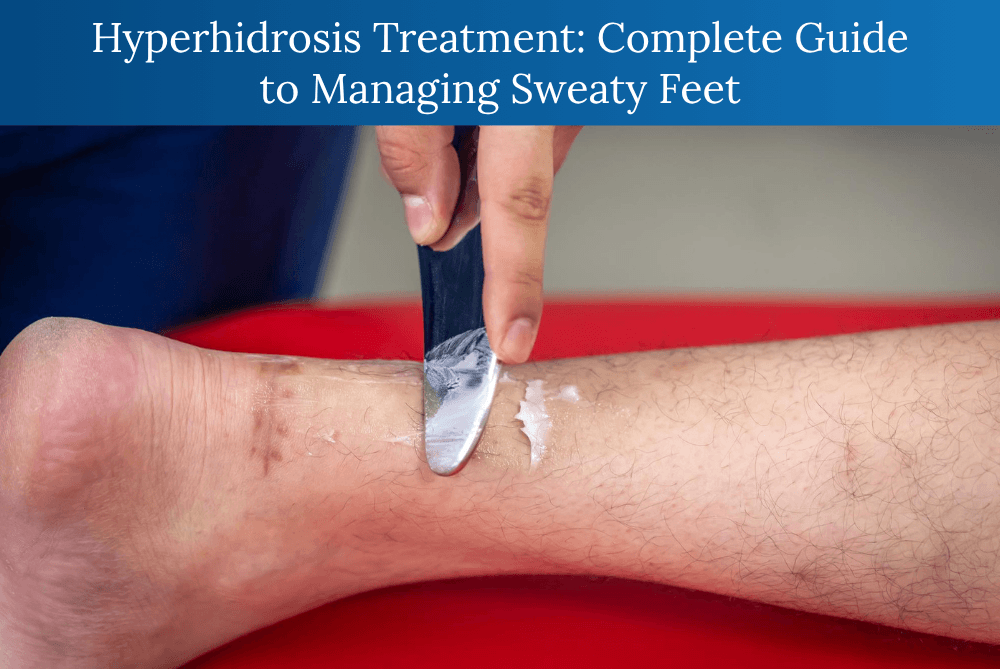
Have you ever taken off your shoes in a quiet room only to notice damp footprints? Or struggled with foot odor despite washing daily? You’re not alone. Sweaty feet affect millions of people and can be a source of real discomfort. This guide breaks down what causes painful and embarrassing foot sweat. Explore the real ways to manage it—including medical, lifestyle, and alternate options.
What is hyperhidrosis treatment?
Hyperhidrosis treatment refers to ways to reduce excessive sweating beyond what your body needs to cool down. When it occurs on the feet, it’s called plantar hyperhidrosis. In normal sweating, your body controls heat. With hyperhidrosis, sweat glands produce excessive moisture even at rest or in cool environments.
Sweaty feet are more than an annoyance. Constant moisture leads to skin problems, infections, odor, blisters, and social discomfort if not properly managed.
What Causes Sweaty Feet?
Your feet have hundreds of sweat glands per square inch—more than most parts of the body. But sometimes these glands become overactive or are triggered without obvious reasons. Here are the main causes:
Key Causes for Excessive Foot Sweat
Hyperhidrosis
This is the main cause of sweaty feet. Hyperhidrosis is a medical condition where sweat glands are overactive even when not needed for cooling. It affects feet, palms, underarms, and the face. Sometimes it runs in families and may be triggered by faulty nerve signals.
Overactive Sweat Glands
Even without a true diagnosis of hyperhidrosis, some feet simply have stronger nerve stimulation to sweat glands. This leads to more sweat than normal.
Poor Footwear & Socks
Non-breathable shoes and synthetic socks trap heat and moisture close to skin. This makes feet sweat more and keeps them wet longer.
Stress and Anxiety
Emotional stress triggers your nervous system. That causes more sweating even if your body is not hot. Patients often notice more sweaty feet during stressful moments.
Medical Conditions
Secondary hyperhidrosis occurs with other health issues like hormonal imbalance, thyroid problems, diabetes, or medications that stimulate sweat glands.
Explore the Top-Tier Hyperhidrosis Treatments
There are safe and effective ways to treat sweaty feet. Most start with simple options and move to stronger therapies if needed.
Prescription Antiperspirants
Medical-strength antiperspirants contain aluminum chloride or related salts. These agents block sweat ducts so less sweat reaches the skin surface. They are often the first step before other procedures. Applied at night and washed off in the morning, these can help keep feet drier.
Botulinum Toxin Injections (Botox)
Botox injections contain a purified toxin that temporarily blocks nerve signals to sweat glands. When grafted into the soles, they stop sweat glands from being activated. This reduces foot sweat for about 3-4 months per session.
Topical Wipes & Creams
Some topical products, including wipes and medicated creams, contain sweat-blocking ingredients. They help but may be less effective than prescription antiperspirants. Dermatologists often recommend these as support tools.
Iontophoresis
Iontophoresis uses a low-level electrical current passed through water to reduce sweat gland activity. Research shows this helps up to 90% of people with sweaty hands and feet, reducing sweating over time. It’s safe and often done at home with a device after initial guidance from a doctor.
Microwave Therapy (miraDry)
Microwave technology permanently reduces sweat gland tissue by delivering energy under the skin. It’s FDA-approved for underarms but is also being explored for feet. This is a more invasive option but can provide long-term sweat reduction for resistant cases.
Explore the Oral Medications
In some cases, medicine taken by mouth helps control excessive sweating by interrupting nerve signals that trigger sweat glands.
Anticholinergics
These systemic drugs block certain nervous receptors to reduce sweat production. Examples include glycopyrrolate and oxybutynin. They can be effective but have side effects like dry eyes, dry mouth, or blurred vision. Plus, sweating may still occur during heat or exercise.
Antidepressants
Some people benefit from antidepressants that reduce anxiety-triggered sweating. These are used carefully under medical supervision and are not a first-line treatment.
Alternative and Lifestyle Management
Medical treatment is only one piece of the puzzle. Everyday habits matter a lot too.
Lifestyle Changes
- Wear moisture-wicking socks made of cotton, wool, or technical fabrics.
- Choose breathable shoes with mesh or leather to allow airflow.
- Rotate shoes daily so they fully dry out between wearings.
- Foot powders can absorb sweat and reduce odor.
- Good foot hygiene—washing and drying feet daily—reduces moisture and bacterial growth.
Alternative Therapies
Some people find relief with:
- Relaxation techniques to reduce stress-induced sweating
- Tea soaks (tannins can reduce moisture)
- Baking soda or corn starch to absorb sweat between activities
These aren’t cures, but they help improve day-to-day comfort.
Can Sweaty Feet Cause Infections?
Yes. Constant moisture creates the perfect place for fungi and bacteria to thrive. These infections can be painful and hard to treat.
Key Complications Caused by Sweaty Feet
Athlete’s Foot (Tinea Pedis)
A fungal infection causing itching, peeling, and cracking skin between toes. The warm, moist environment of sweaty feet is ideal for fungal growth.
Toenail Fungus
Chronic moisture under the nail can lead to thickened, discolored, and brittle nails.
Pitted Keratolysis
Bacterial infection that creates crater-like pits on the soles. It thrives in wet, sweaty conditions.
Cellulitis
Bacterial skin infection that can spread rapidly. Excess moisture and micro-tears from friction make entry points for bacteria.
Blisters & Skin Breakdown
Continuous moisture softens skin, raising your risk for blisters and painful tears.
Conclusion
Sweaty feet are common but manageable. Whether it’s through strength-grade antiperspirants, advanced medical treatments like iontophoresis, or simple lifestyle habits like breathable shoes, relief is possible. Severe cases can be helped with Botox or oral medications under medical care. The key is to understand what triggers your sweating and tailor a plan that works for you.
FAQs
Is hyperhidrosis a medical condition?
Yes. Hyperhidrosis is a medical condition where the nervous system triggers excessive sweating beyond what’s needed for temperature control.
Does antiperspirant work for sweaty feet?
Yes, especially medical-strength antiperspirants. They block sweat ducts and often help reduce sweat production.
What is iontophoresis treatment for feet?
Iontophoresis passes a mild electrical current through water with your feet immersed. It reduces sweat gland activity and can dramatically cut sweating with regular use.
How long does Botox last for hyperhidrosis?
For sweaty feet, Botox injections typically reduce sweating for about 3–4 months per session.
Why do sweaty feet smell?
Moisture-trapped feet encourage bacteria growth that breaks down sweat and produces odor. Good hygiene and sweat control can reduce smell.
